Clarity, Confidence, and Creativity: How to Deal with Stress, People and Life

Everyone has heard the statistics: 75% of Americans describe their lives as “very stressful,” and with the pace of change, it’s expected to get worse. As a psychologist and speaker, I try to do more than just give people “stress management” techniques or coping methods. Instead, I first show them why so much of the advice on how to deal with stress and these other issues won’t totally solve the problem.
I then give them new information and a step-by-step system for accessing their clarity, confidence, and creativity, even in the most difficult situations.
How Your Brain Interprets Data — And Stress
The origin of this new information is rooted in the new developments in brain science. For example, most people know that our brains are divided into 3 parts: the brain stem, the limbic system, and the neocortex.
The brain stem (the lower part of the brain) is where our fight-or-flight responses are located and also regulates our heart rate, muscle tension, blood pressure, etc.
The middle brain is called the limbic system. This is where our emotions are triggered, for the most part. However, what most people don’t know is that this part of the brain also acts as a gatekeeper or, in today’s terminology, it acts as a scanner, a processor, and a router. It scans incoming data, processes or interprets it, and then routes it either down to the brain stem or up to the neocortex, the upper 80% of our brain where we have access to our interpersonal skills, such as judgment, creativity, compassion, and communication, among others.
This means that as we move through the day, data from our 5 senses comes in and is first examined (scanned) by the limbic system. If the limbic system determines that the information is not problematic or threatening or dangerous, it sends it up to our neocortex. In this case, our brain stem works in the background — regulating our breathing, blood pressure, heart rate, etc. — and all is well.
However, if the limbic system senses any problem, anything, or anyone it doesn’t like or has identified as a stressor or threat to either our physical well-being or psychological peace of mind, it sends the information immediately to the brain stem, bypassing the neocortex.
Unfortunately, when we try to address the perceived problem from this lower, reactive brain, we are often less than successful, which, of course, leaves us feeling even more stressed, frustrated, and ineffective. The limbic system interprets this additional frustration as further negative data and dutifully sends it back down to the brain stem, creating a self-perpetuating cycle.
Reaching ‘The Top of the Mind’
The key to creating and sustaining success in life, therefore, is to reprogram or retrain the limbic system to see stress for what it is, not as something being done to us. (i.e., “Deadlines/difficult people really stress me out!”) Instead, we need to recognize that stress is actually a chemical change in our body and signals that data is being sent to the lower 20% of our brain.
Next, we must be able to shift to the upper 80% (what I call “The Top of the Mind”) to access the interpersonal and problem-solving skills needed to bring our best to life.
In my books, presentations, and coaching sessions, I give participants a model for making this shift, a second model for staying in this “Top of the Mind” perspective regardless of the situation, and a third for engaging others (who are themselves stuck in the brain stem) in such a way that they shift from their “resistant brain” to the more “receptive brain,” which allows them to hear our suggestions as valuable information.
All of these models are described in depth in my book, “Life from the Top of the Mind,” and I teach them in my seminars and training sessions. However, there is one tool that you can use to get at least a sense of what this “Top of the Mind” perspective is like. The effectiveness of this tool lies in the power of questions.
You see, when we are talking about engaging very specific parts of the brain, questions are like “Google on steroids” in the sense that they become the “search engine of the brain.” Unfortunately, when we are stressed and/or frustrated, we tend to ask what I call “BS” or “brain stem questions,” which are questions about the perceived stressor. Examples include:
- “What’s wrong with these people?”
- “What were you thinking?”
- “Why does this always happen to me?”
- “How many times have I told you . . .?”
Regardless of the specifics, questions like these engage the lower 20% of the brain and, as such, are a big part of the problem.
The 4 Criteria: Questions for the Neocortex
Therefore, to address this problem, I have created an alternative set of questions that can be asked and answered only by the upper 80% of the brain (the neocortex), which I call “The 4 Criteria.” The value of these interrogatories is that they allow us not only to evaluate any reactive response but also to identify a “Top of the Mind” alternative.
These 4 Criteria, or neocortex questions, are:
1. Has this thought, emotion, or action been chosen deliberately, or on purpose?
Most people would say that they don’t choose to be stressed or frustrated on purpose; it just seems to happen to them.
2. How is it working for me?
In other words, to what degree do I feel that my stress, frustration, resentment, etc., is helping me become more effective and/or encouraging to others to hear what we have to say? Again, most people would not identify these reactions as highly effective or desirable.
3. Is this thought, emotion, or action making the statement I want to make about who I am?
This question goes way beyond just avoiding the problem and speaks to the fact that everything we do makes a statement about who we are and who we are becoming. Just as most people would say that they are not becoming stressed, annoyed, and/or frustrated on purpose, most would also say that these would not be the words they would choose to define who they are (“I am someone who is reactive, frustrated, stressed, annoyed, etc.”)
When we say that the challenges we face “make us” feel or do one thing or another — deadlines make me nervous, difficult people make me angry — what we are really saying is that the negative situations and people in our lives have the power to define us!
Given that we do not want to be defined by the negative aspects of life, I believe we must take personal responsibility for this process and define ourselves on purpose.
As mentioned, the first step in this process is to determine which part of the brain we are coming from and to evaluate whether our current thoughts, emotions, and/or actions are ones we want to feed or change. The 3 questions of “The 4 Criteria” can go a long way toward making this determination because, as discussed, they are “neocortex questions,” and engage the upper 80% of our brain in the process of evaluation. However, the fourth question is one that many people report being even more powerful than the first 3 combined. It says:
4. Would I teach this thought, emotion, or action to my child, my children or to someone I love?
When I get to this point in my seminars and ask this question, a knowing silence always falls over the participants. The reason is that no one would intentionally teach their children (or anyone they care about) to be stressed, frustrated, depressed, or confused. Thus, this question completes the initial evaluation of our thoughts and emotions in a very powerful way.
Having asked and answered these questions, we are now in the position to use the 4 Criteria to come up with a solution, meaning that we can now ask: “Okay, if I was choosing my thoughts, emotions, and actions on purpose … in a way that I believe would be most effective … in a way that makes the statement I want to make about who I am … and in a way I would teach/recommend to someone I love … what would that look like? How would I be thinking, feeling, and acting differently if this were the case?”
Once we have this new vision of what we want to practice — versus just what we want to avoid — we are then able to use the rest of the “Life from the Top of the Mind” system to not only access our clarity, confidence, and creativity, but also to bring these qualities to all aspects of our lives.
This article was first published on Dr. Crawford’s blog.
Want to learn more? Then check out Dr. Bill’s discussion, The Science of Calm, Confident Leadership. The discussion includes a Q&A session with Vistage Chair Bonita Inza.
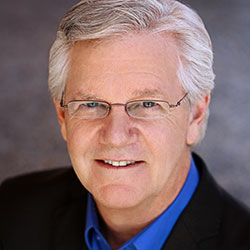
 About the Author: Bill Crawford
Dr. Crawford is a licensed psychologist, author of eight books, organizational consultant and Vistage Speaker of the Year for 2019. Over the last 30 years he has created over 3,500 presentations for such organizati
…